A slop free bushing and hardened guide rods separate professional results from frustration. Look for bronze or linear ball bearing sleeves that maintain trueness over thousands of cycles. The angle scale must have crisp, engraved markings that won’t wear off with shop use. A wide, stable base with pre drilled clamp slots prevents the jig from tipping during deep boring.
Angled holes can make or break a project, and a standard drill press often limits you to straight vertical cuts. A multi angle drill guide transforms your handheld drill into a versatile tool capable of clean 30, 45, 60, or 90 degree bores. This portable jig eliminates guesswork, wobbly starts, and the need for a bulky floor standing machine. You gain workshop level accuracy right on the workpiece, even in tight corners or during on site work.
What Is a Multi Angle Drill Guide?
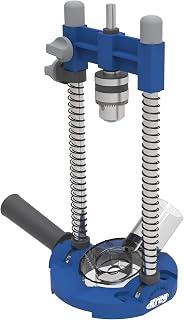
Kreg Drill Guide Pro KDG6500
A multi angle drill guide is a compact jig that holds your drill at a precise, repeatable angle relative to the surface. Unlike a simple bubble level, it encloses the bit in a hardened steel or bushing lined barrel, preventing walkout and deflection. You simply set the desired angle, lock it, and clamp the guide to your stock. This turns any corded or cordless drill into an angled boring station without sacrificing portability.
These guides feature a pivoting base plate with laser etched degree markings, so you can dial in anything from a shallow cable pass to a steep pocket hole. Many models include an integrated depth stop and a fence for edge alignment. The best versions accommodate multiple drill collar diameters, ensuring a snug, zero slop fit. From face framing to cable railing installations, the mechanism becomes an indispensable layout aid.
Key Benefits of Using a Multi Angle Drill Guide
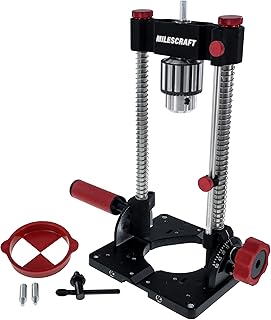
Milescraft 1348 Drill Mate PRO
The primary advantage is eliminating angled bore errors that ruin expensive hardwood or metal stock. You gain repeatability: once the protractor is set for a task like stair baluster holes, every hole matches perfectly. The rigid guide shaft prevents bit wander on rounded or textured surfaces, something impossible to do freehand. Additionally, a portable drill guide saves you from maneuvering a heavy assembly around a fixed drill press column.
Precision also translates into stronger joints. Pockethole joinery, doweling, and anchoring all benefit from exact entry and exit alignment. The jig’s clamp system keeps both hands free to manage the trigger and dust extraction. Over dozens of repeat operations, this consistency markedly reduces hand fatigue and rework. It’s the difference between a garage build and furniture grade craftsmanship.
Types of Multi Angle Drill Guides
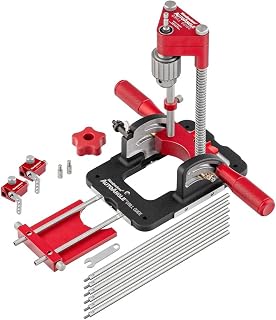
Woodpeckers AutoAngle Drill Guide Deluxe
Designs split broadly into two categories: block style and rail guided systems. Block style jigs are minimal, with a drilled aluminum or steel cube set at common angles like 30, 45, and 90 degrees. They slip over the bit and are ideal for quick one off tasks. Rail guided systems use dual polished rods and a spring return action, much like a miniature drill press quill.
Within the rail group you will find basic adjustable bases and premium models with self centering V jaws. Some are dedicated to specific jobs, such as cable railing drill guides designed exclusively for post and tube alignment. Others serve as universal platforms compatible with routers and rotary tools. Your choice depends on whether you need a single angle repeatedly or a variable range with micro adjust functionality.
How to Use a Multi Angle Drill Guide Effectively
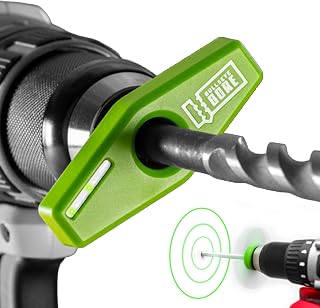
BullseyeBore Core CG1-101
Begin by securing the workpiece firmly with a clamp or bench vise, guaranteeing it won’t shift. Mark your hole location with a center punch, which gives the guide’s bushing a positive starting reference. Mount your drill collar into the guide’s chuck adapter and tighten any thumbscrews until the tool feels solid. Then loosen the angle lock, align the index mark to your desired degree, and retighten fully.
Position the base so the guide barrel aligns exactly over your punched mark and clamp the jig down. Apply steady pressure to the quill feed handles, letting the bit cut without forcing it. Retract frequently to clear chips, especially in dense materials like maple or steel plate. When done, release the spring first, then switch off the drill to maintain control. For repetitive patterns, a stop collar on the drill bit ensures uniform hole depth across all locations.
Top Features to Look For
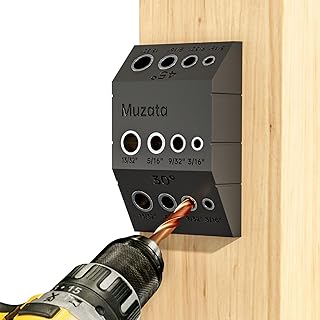
Muzata Upgraded Multi-Angle Cable Railing Drill Guide
A slop free bushing and hardened guide rods separate professional results from frustration. Look for bronze or linear ball bearing sleeves that maintain trueness over thousands of cycles. The angle scale must have crisp, engraved markings that won’t wear off with shop use. A wide, stable base with pre drilled clamp slots prevents the jig from tipping during deep boring.
Depth control is another hallmark, so prioritize models with a measurable stop rod and positive lock knob. Compatibility with a range of drill collar sizes, typically 43mm or 55mm, broadens your tool options. A removable fence extension helps you register off edges for joinery work. Finally, consider whether the jig accepts bushings for different bit diameters, converting it into a dedicated doweling station.
DIY Projects Made Easy with Multi Angle Drill Guides
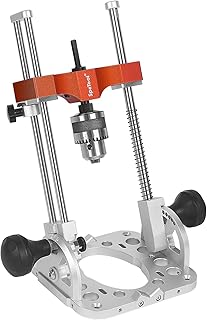
SpeTool Portable Drill Guide with Liner Ball Bearings
Installing cable or glass railing systems becomes dramatically simpler when you clamp a dedicated jig to the post. The guide ensures every pass through is precisely aligned for straight cable runs without binding. Building a loft bed or bunk bed requires consistent angled pocket screws for the guardrail and ladder. A multi angle guide produces clean face frame joinery without expensive pocket hole machines.
Outdoor projects gain structural integrity, like drilling angled drainage holes in planter boxes or seating slats. Chair and stool legs often splay outward, demanding accurate compound angles that are tough to cut by eye. Even template routing for mortise hardware can start with a perfectly angled pilot hole from the same guide. You will find yourself reaching for the jig whenever a blueprint calls for anything beyond a straight vertical bore.
Multi Angle Drill Guide vs. Traditional Drill Press
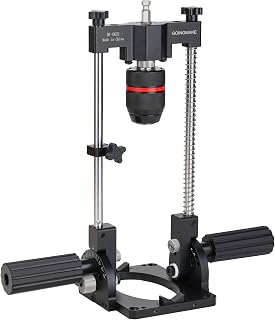
GOINGMAKE Portable Drill Guide
A drill press offers massive torque and a fixed vertical axis, but tilting the table for angles often sacrifices accuracy and clamping space. The portable guide flips the equation: you hold the machine, but the jig sets the angle, letting you bore into assembled furniture or in situ framing. Weight is a fraction of a bench drill, and storage demands only a drawer. For jobsite carpentry, the guide wins mobility hands down.
However, metalworking with large bits can strain a handheld drill motor beyond its cooling capacity. In those high volume or heavy gauge scenarios, the drill press’s rigid column and lower RPM gearing are superior. The best practice is to own both: a floor press for repetition milling, and a multi angle guide for installation, trim work, and field repairs. Together they cover every possible drilling orientation.
Portable vs. Bench Mounted Drill Guides
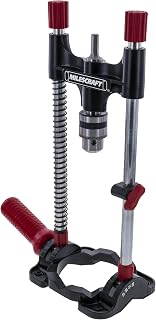
Milescraft DrillMate 1318
Portable models clamp directly onto your workpiece and move with you, excelling at large panel work or stair stringers. They often feature a quick release base and optional edge guides. Bench mounted units bolt to a plywood board and function like a mini drill press, complete with a crank operated quill. The unchanging setup benefits production runs of identical parts, but sacrifices the ability to bring the tool to the material.
If your projects include installing doors, siding, or decking, portability is crucial. A clamp on guide allows you to drill hinge screw angles on a hung door without removal. Conversely, dedicated shop workflows like drilling pen blanks or repetitive angle doweling thrive on a bolted down station. Some hybrid designs offer a removable base, giving you both modes in one kit.
Understanding Angle Settings: 30, 45, 60, and 90 Degrees
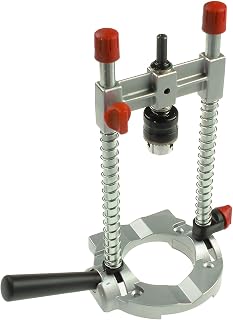
Richelieu Multi Angled Drill Guide
Common preset angles correspond to specific construction needs. A 30 degree angle is widely used for cable railing passes and shallow pocket holes in thinner materials. The 45 degree setting handles miter joint reinforcement, picture frame corner screws, and chamfered trim. At 60 degrees, you can create steep entry points for electrical chases or complex timber framing connections.
Ninety degrees, or perfectly straight, remains a vital calibration check to ensure the jig isn’t worn or misaligned. Many advanced guides offer continuous adjustment from 0 up to 60 degrees, giving infinite control between these detents. This flexibility is essential for dowel joinery applied to splayed furniture legs. Having the right angle means your fasteners maintain full thread engagement without breaking through a side wall.
Maintenance and Care Tips
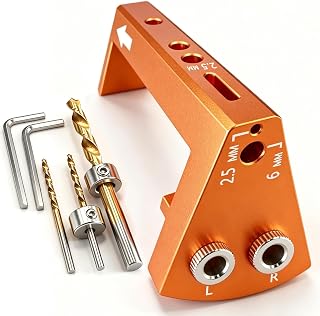
Undermount Drawer Drilling Guide
Keeping guide rods and bushings clean directly impacts drilling accuracy. Blow out wood dust with compressed air after each use, then apply a light coat of machine oil to steel parts. Avoid lubricants that attract grit, which can score aluminum bores. Periodically check all knobs and set screws for tightness; vibration will loosen them over time.
If your jig includes a removable drill collar, remove it occasionally and clear any debris on the mount surface. Store the guide in a dry case to prevent corrosion on the angle scale. For bushing wear, listen for runout chatter, a high pitched squeal that indicates it’s time for a replacement. With routine upkeep, a quality multi angle drill guide will deliver dead on results for a decade or more.
Common Mistakes to Avoid
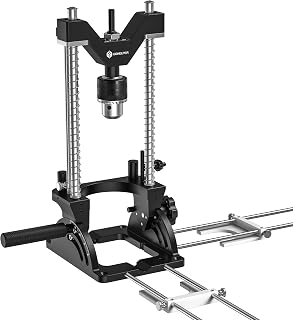
Portable Drill Guide with Guide Rod
One frequent error is forgetting to clamp both the jig and the workpiece, which invites dangerous kickback. Relying on the drill’s own weight rather than feeding with the quill handles can cause binding and bit breakage. Neglecting to center punch leads to the bit skating across smooth surfaces, especially on polished metal. Another pitfall is using an over length bit that flexes under pressure, ruining hole straightness.
Operators also sometimes rush the retraction, pulling chips back into the bushing and scoring the walls. Don’t ignore the drill’s clutch setting when working with dense hardwoods; use a lower speed to prevent burning. Always verify the angle lock before starting, because a single slipped degree on a matched set can create misaligned joinery. Following a simple checklist removes these risks.
Choosing the Right Multi Angle Drill Guide for Your Workshop
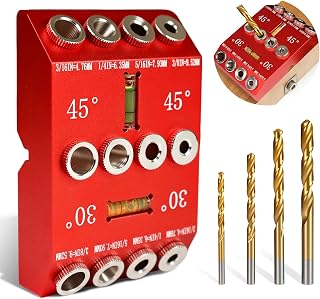
Gickbusus 30/45/90 Degree Drill Guide
Match the jig to your primary workflow: cabinet makers benefit from a rail guide with fence and depth stop, while construction pros need a rugged clamp on block. Evaluate material construction, cast aluminum bases dampen vibration better than plastic. Check maximum bit capacity, especially if you run Forstner or spade bits for large joinery holes.
Reviewing a best angle drill guide comparison helps narrow features versus cost. Consider whether you will often drill into curved surfaces; a V padded base aids stability there. Look for a model that includes multiple bushing sizes or a universal chuck adapter. Finally, verify the warranty and availability of spare parts, because a good jig becomes a long term shop partner.
Multi Angle Drill Guide Accessories and Upgrades
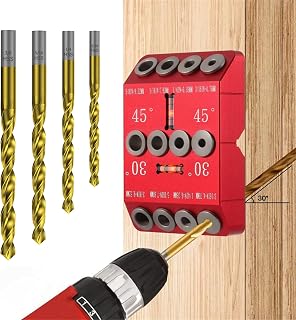
30 45 90 Degree Angle Drill Guide Jig
Enhance precision with a set of bushing inserts that adapt the bore to smaller bits without sacrificing alignment. Quick release toggle clamps replace thumb screws for faster repositioning across large sheet goods. A laser center finder accessory can project a crosshair onto your punch mark, speeding up job setup. Aftermarket fences extend the reference surface for edge drilling on narrow stock.
Some users add a dust collection shroud that mates with a shop vacuum, keeping the bushing clean during long sessions. High quality brad point bits extract material efficiently and reduce tear out at the hole exit. If you frequently perform pocket hole joinery, a dedicated stepped drill bit and depth collar kit is a worthwhile addition. For mastering the technique, learning how to use an angle drill guide correctly unlocks all these accessory benefits.
Frequently Asked Questions
Can a multi angle drill guide replace a drill press? It can handle most woodworking and light metal tasks, especially when angle flexibility is required. Heavy steel drilling and high volume repetition still call for a dedicated drill press. For the home workshop, a quality portable guide covers 90% of needs.
What is the maximum angle these guides can achieve? Most standard models adjust from 90 degrees (straight) down to 20 or 30 degrees, with some capable of a full 0 to 60 degree sweep. Always check the manufacturer specifications for your model before purchasing.
Do I need a special drill to fit the guide? No, the majority of jigs accept standard drill collar sizes, usually 43mm or 55mm, common on most 3/8 inch and 1/2 inch drills. An included adapter ring ensures a snug, chatter free mount.
Are multi angle drill guides useful for metalworking? Yes, with appropriate carbide bits and cutting fluid, they produce precise angled holes in aluminum, mild steel, and even hard plastics. Always reduce speed and apply steady feed pressure to avoid work hardening the metal.
Conclusion
A multi angle drill guide elevates everyday drilling from rushed guesswork to controlled craftsmanship. It saves time, material, and the frustration of mangled joinery by enforcing the exact angle every time. By selecting a sturdy model with clear markings and maintaining it properly, you build a reliable system that fits in a tool bag. Embrace the jig for your next angled task, and you will wonder how you ever managed without it.
For further reading, consult professional woodworking resources on jig setup and advanced techniques. Pair your new guide with sharp bits and deliberate feed, and watch your project quality soar. Precision angled holes are now squarely within reach, no massive machinery required.
Disclosure: As an Amazon Associate, we earn from qualifying purchases at no extra cost to you. Our posts are created with AI tools and human editing.