The Importance of a Perfect Chuck Key Fit
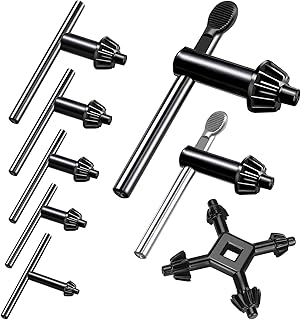
8Pcs Universal 4 in 1 Drill Chuck Key Set
Check PriceGrabbing a drill chuck key that almost fits can ruin your chuck, damage the bit, and create a serious safety hazard. Even a tiny mismatch in pilot diameter or gear pitch will cause slippage under torque. That slipping action scores the chuck collar and rounds off the key’s teeth, making future use impossible.
A correctly sized key engages the chuck’s gear ring with full contact and zero play. You’ll feel a solid, smooth rotation every time you tighten or loosen the jaws. This precision preserves the chuck’s gripping power and keeps your drill bit perfectly centered.
Manufacturers build chucks with specific pilot holes and tooth counts, so there is no universal fit. When you learn how to measure drill chuck key size accurately, you save time, money, and scrap workpieces. Our guide walks you through every step and product so you never guess again.
Anatomy of a Drill Chuck and Key
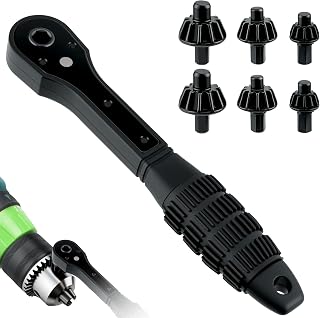
Mcbazel 3-in-1 Ratchet Chuck Key
Check PriceA drill chuck key has three main parts, the pilot pin, the gear teeth, and the handle. The pilot is the smooth cylindrical nib that slides into the chuck collar’s alignment hole. It keeps the key perpendicular so the teeth engage the chuck ring without wobble.
The gear teeth cut around the key’s beveled head mesh with the chuck’s internal bevel gear. Each manufacturer chooses a tooth count, shape, and angle, which creates compatibility groups. Knowing these details helps you match replacements, especially when the original key is lost.
The handle usually accepts a sliding bar or has a built in ratchet mechanism for added leverage. Many modern keys integrate a spring loaded ball detent that snaps into the chuck to prevent accidental disengagement. Understanding this anatomy transforms a simple key from a mystery into a measurable tool.
Standard Chuck Key Sizes and Pilot Numbers Explained
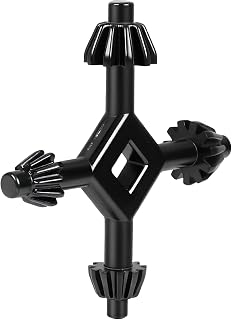
4 in 1 Drill Press Chuck Key (1/4-1/2)
Check PriceChuck keys are often labeled with a pilot number, such as K1, K2, K3, K4, or K32. Those numbers correspond to a specific pilot diameter and gear pitch used by major brands like Jacobs. A K3 key, for instance, fits many 3/8 inch and 1/2 inch capacity chucks with a 5/32 inch pilot pin.
The most common pilot diameters you will encounter are 1/8 inch, 5/32 inch, 3/16 inch, and 1/4 inch. Small hobbyist chucks often use a K1 or K0 with a 1/8 inch pilot, while heavy industrial chucks demand a K4 or larger. Always verify the pilot size before ordering, because some off brand drills use unique dimensions.
Tooth counts help narrow the choice further, a 1/2 inch chuck may use a 14 tooth key while other models use 15 teeth. A mismatched tooth count will feel rough and skip under load. Many quality replacement sets include multiple pilots and tooth profiles, making them a smart buy for mixed workshop environments.
How to Measure Your Existing Chuck Key Pilot Size
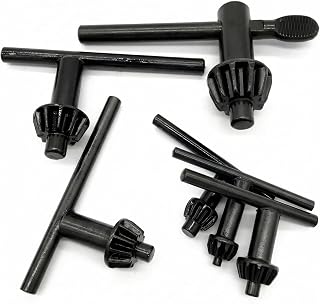
6 Sizes Heavy Duty Chuck Key Set
Check PriceIf you still have the old key, measuring it is the fastest path to a perfect replacement. Use a caliper or a precision drill gauge to check the diameter of the smooth pilot pin. Do not measure the toothed head, measure only the cylindrical tip that enters the chuck body.
Place the key on a flat surface and position the caliper jaws gently across the pilot. For imperial chucks, typical readings will be 0.125 inch, 0.156 inch, 0.187 inch, or 0.250 inch. Write down the exact thousandth reading because even a few thousandths difference can prevent the key from seating.
Next, count the number of teeth on the beveled gear head while rotating the key slowly. A magnifying glass and a marker help track your count. Confirm that the key’s tooth shape, fine or standard, matches the worn impressions on the chuck ring.
Measuring the Chuck Collar for a New Key

DEWALT DW2301 Chuck Key
Check PriceWhen the original key is missing, you must measure the chuck itself. First, find the small receiving hole on the outer collar and measure its internal diameter with a drill bit or pin gauge. This hole directly accepts the pilot, so your new key’s pilot must slide snugly without forcing.
Inspect the bevel gear ring on the chuck while rotating the sleeve. Count the teeth you see around the full circle, or estimate by counting a quarter section and multiplying. Some chucks have an accessible number stamped on the side, like ‘3/8-24 UNF’ or a Jacobs model number, which simplifies the search.
After you have the pilot diameter and tooth count, cross reference with manufacturer charts. For older machines, check our guide on drill chuck types to identify tapered mount styles. These measurements guarantee you purchase a key that engages smoothly and locks the bit without compromise.
Gear Tooth Styles: Fine vs. Standard vs. Coarse
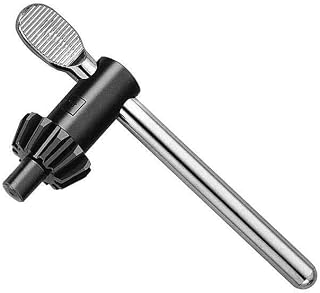
JACOBS K3 Chuck Key
Check PriceBeyond pilot size, gear tooth profile is the hidden factor that causes mismatches. Fine tooth chucks, often found on high precision drill presses, use smaller, closely spaced teeth for smoother torque transmission. Coarse teeth handle heavy industrial applications but require the key to be fully seated or they will strip.
Jacobs’ standard tooth profiles cover many home and prosumer drills, including the classic K3 and K4 series. A visual inspection tells you if the teeth are pointed or more squared, and if the vallys are narrow or wide. Mixing a fine pitch key with a coarse chuck results in grinding and erratic tightening.
For workshop versatility, combination keys with dual sided heads offer both fine and standard gears on one tool. These clever designs reduce clutter and solve the problem when you work across multiple drill press brands. Always store such keys carefully so the dual profiles don’t get damaged in a jumbled drawer.
Universal Keys vs. Brand Specific Models
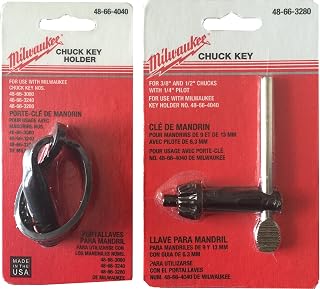
Milwaukee Chuck Key & Holder Bundle
Check PriceA universal 4 in 1 key features a rotating head with four different pilot sizes on a single tool. These are perfect when you service drills from various decades and manufacturers in one shop. The compact design eliminates the need to keep a drawer full of individual keys, though the tradeoff is slightly less ergonomic comfort.
Brand specific keys, like a Milwaukee or DeWalt chuck key, are engineered for that tool’s exact gear angle and handle length. They often include rubberized grips and integrated spring retainers that a generic universal key may lack. If you have only one drill, the OEM key usually provides the best in hand feel and secure engagement.
However, many OEM keys are expensive and hard to find, so a quality universal alternative can be a lifesaver. Look for hardened steel construction and precise pilot machining. The best sets, such as those featured in our list of top rated chuck keys, blend durability with cross brand compatibility.
The Advantages of Ratchet Chuck Keys
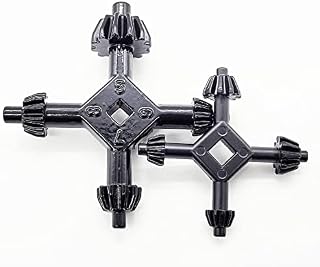
2-Piece 4-Way Chuck Key Set
Check PriceRatchet chuck keys incorporate a reversible ratcheting mechanism inside the handle, allowing you to tighten or loosen without removing the key from the pilot hole. This speeds up bit changes dramatically, especially when you are swapping bits frequently during a production run. A good ratchet key will click audibly with each tooth engagement.
The mechanism reduces the swinging arc needed, so you can work in tight spaces near drill press columns or inside jigs. Some models feature a forward, reverse, and lock selector so you can apply final torque using the full handle. This design is a favorite among machinists and serious woodworkers.
Because ratchet keys have more moving parts, it is crucial to choose models with sealed mechanisms and hardened internals. Dust and metal chips can clog a cheap ratchet quickly, leading to failure. Our pick, the Mcbazel 3 in 1 Ratchet Chuck Key, demonstrates how robust spring loaded pawls should perform.
Trusted Brands and Key Compatibility
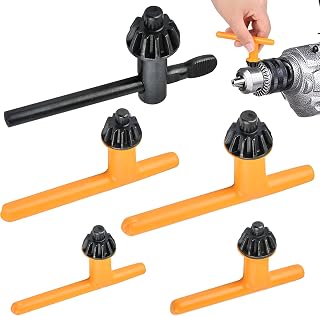
5 Sizes Replacement Chuck Key Set
Check PriceJacobs remains the gold standard for chuck and key engineering, and the JACOBS K3 Chuck Key fits a huge range of 3/8 inch and 1/2 inch drills. Its factory hardened teeth maintain shape even after years of daily use. When you find a genuine Jacobs key, you immediately feel the precision in the pilot fit.
DeWalt’s DW2301 is another consistent performer, designed for their classic corded drills and some radial arm presses. The pilot and gear specs are tightly controlled, so aftermarket copies rarely match the original’s durability. If you are a loyal DeWalt user, sticking with the OEM key is the safest route.
Milwaukee bundles its chuck key with a convenient snap in holder that mounts to the drill’s cord or body. This clever addition prevents the age old problem of losing the key somewhere on the bench. For more insight into professional drill tools, explore Jacobs Chuck Manufacturing for technical specifications.
Safe Operation and Proper Tightening Techniques
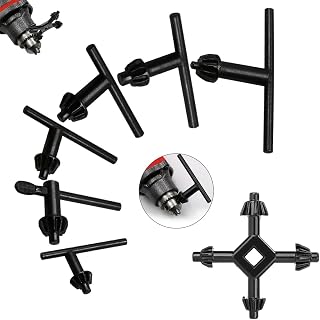
TorSor 7-Pack Drill Chuck Key Set
Check PriceNever leave the chuck key inserted in the chuck after tightening. A key that flies out at startup becomes a dangerous projectile, which is why many keys now include a spring loaded self ejecting tip. Train your muscle memory to remove the key immediately after every single adjustment.
Tighten the chuck by using all three key holes in sequence to achieve even pressure on the bit shank. Grasp the key’s T handle or ratchet and apply firm, steady force without using a pipe extension. Overtightening can deform the chuck jaws and make future bit removal extremely difficult.
On keyless chucks the need for a chuck key disappears, but many high torque applications still rely on keyed chucks for their superior grip. If your drill has a keyed chuck, always store the key in a dedicated holster. The Milwaukee Chuck Key and Holder Bundle solves that storage challenge elegantly.
Maintenance and Storage to Extend Key Life
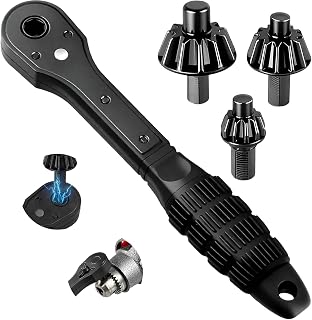
2-in-1 Ratchet Chuck Key Wrench
Check PriceA chuck key coated in oil or light grease resists corrosion and keeps the pilot pin sliding smoothly. Wipe the teeth with a stiff brush to remove packed metal dust that can grind down the precision profile. A neglected key will transfer grit into the chuck gear, accelerating wear on both components.
Store the key on a magnetic strip near the drill press or in a dedicated drawer slot where it won’t bang against other metal tools. Chipped teeth are irreversible and cause uneven tightening. Some machinists dip the pilot pin in tool wax, which reduces friction and extends pilot life.
Periodically inspect the key’s handle attachment, especially on riveted models, because a loose handle can slip and injure your hand. Ratchet mechanisms should be cleaned and sparingly lubricated per the manufacturer’s instructions. A well maintained key ensures each bit change is fast, safe, and slip free.
Signs It’s Time to Replace Your Chuck Key
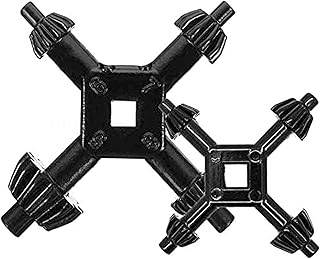
Thaekuns 2-Pack 4 in 1 Chuck Key Set
Check PriceVisually inspect the gear teeth under bright light, any rounding, chips, or flat spots mean the key is done. Even a single damaged tooth will cause the key to jump when you apply torque, leading to a stripped chuck ring. Continuing to use a worn key permanently damages the chuck, requiring a full replacement.
If the pilot pin is bent or shows heavy scoring, it will bind inside the chuck hole and make alignment frustrating. Run your fingertip along the pin, if it feels rough or out of round, retirement is due. A loose pilot also allows the key to tilt and chew up the gear flanks.
When you notice the key rocking noticeably in the engaged position, the internal hole in the chuck may also be worn. This is a critical warning sign to address immediately. Replacing just the key is much cheaper than replacing the entire chuck, so don’t delay.
Frequently Asked Questions About Drill Chuck Key Size
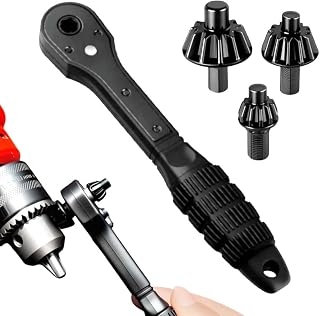
3 in 1 Ratchet Chuck Spanner
Check PriceCan I use a 3/8 inch chuck key on a 1/2 inch drill?
Only if the pilot size and tooth count match exactly. Chuck capacity and key size are not directly linked; a 1/2 inch chuck may use a K3 key that also fits some 3/8 inch chucks. Always verify the pilot diameter first, because assuming correlation leads to stripped gears.
How do I identify a Jacobs chuck key number?
Jacobs stamps the key number, like K2 or K32, on the handle or the gear head. If the stamp is worn, measure the pilot pin and count the teeth to cross reference against Jacobs’ official charts. The pilot dimension for a K3 is consistently 0.156 inch, which is a reliable identifier.
Are 4 way chuck keys as strong as dedicated single size keys?
Modern 4 way keys built from hardened chrome vanadium steel are very durable for general use. The rotating head introduces a slight mechanical joint, but quality ones maintain tight tolerances. For heavy industrial work where peak loads are extreme, a solid single size key remains the strongest choice.
What is the pilot hole measurement range?
Pilot holes typically range from 0.125 inch for mini chucks up to 0.250 inch for large industrial models. Metric versions, 4 mm, 5 mm, 6 mm, appear on European drills. Using calipers ensures you don’t confuse a worn 0.187 inch hole with a true 0.156 inch receiver.
Getting the drill chuck key size right preserves your equipment and makes every project safer. Whether you choose a universal 4 in 1 set, a genuine OEM replacement, or a smooth ratcheting model, the key lies in measuring pilot diameter and tooth geometry precisely. Invest a few minutes measuring before you buy, and your drill chuck will deliver years of rock solid service.
Disclosure: As an Amazon Associate, we earn from qualifying purchases at no extra cost to you. Our posts are created with AI tools and human editing.