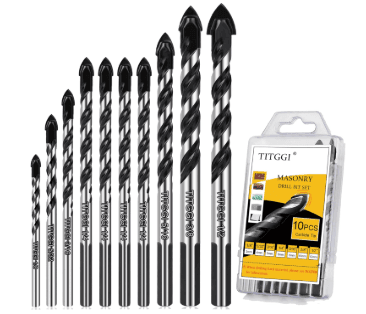
What Is a Drill Press Used For: Core Capabilities
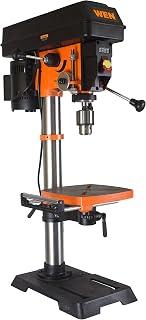
WEN 12-Inch Benchtop Drill Press, 6.2-Amp Variable Speed Motor with Cast Iron Construction, Laser and LED Work Light (DP1263V)
Check PriceA drill press is a stationary tool designed for boring accurate, repeatable holes into a wide variety of materials. Unlike a handheld drill, it uses a fixed spindle and adjustable table to deliver consistent depth and perpendicularity. You can machine wood, metal, plastic, and composites with far greater precision and safety than any portable option. It opens up tasks like doweling, countersinking, tapping, and even light sanding with the right accessories.
Understanding what a drill press is used for starts with its ability to maintain perfect alignment under pressure. The cast iron base and column absorb vibration so the bit does not wander. This makes it a cornerstone in workshops for producing identical parts, from furniture joinery to automotive brackets. For a deeper look at selecting the right stationary tool, explore our guide to the best drill presses for every workshop.
Drilling Through Tough Metals with Precision
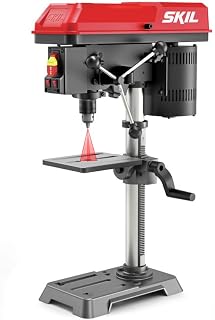
SKIL 6.2 Amp 10 In. 5-Speed Benchtop Drill Press with Laser Alignment & Work Light – DP9505-00
Check PriceOne of the primary jobs a drill press handles effortlessly is boring through ferrous and nonferrous metals. With a rigid column and secure vise, you can slow the spindle speed down to cut steel, stainless, and cast iron without burning bits. The controlled feed rate prevents work hardening and extends tool life. Add cutting fluid and a sharp cobalt or carbide bit to make clean, burr free holes every time.
Aluminum and brass respond beautifully to higher speeds and need less pressure. Because the table locks firmly, you avoid the chatter that plagues hand drilling on these softer alloys. Even thick plate stock up to 1/2 inch becomes manageable with a 3/4 HP motor and a quality step bit. This capability transforms a drill press into a must have for fabrication and home machine shops.
Woodworking Essentials Every Drill Press Handles
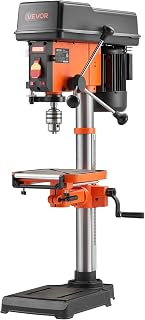
VEVOR 12-Inch Benchtop Drill Press, 6.2 Amp, 1 HP Bench Drill Press, 530 to 3140 RPM Variable Speed, 0-45° Tilting Worktable, with Laser and LED Work Light, Tabletop Drilling Machine, for Wood Metal
Check PriceIn woodworking, a drill press is used for more than simply drilling shelf pin holes. It excels at boring large diameter openings with Forstner bits, creating flat bottomed cavities for hinges, and cutting decorative plug holes. The depth stop ensures every recess matches perfectly across multiple workpieces. This repeatability eliminates the guesswork from casework and cabinetry.
The machine also prevents blowout on the exit side when you place a sacrificial board underneath. Variable speed models allow you to dial up RPMs for clean cuts in hard maple or slow things down for resin filled blanks. A fence and clamp system turns the press into a precise boring station for dowel joinery and shelf standards. Even delicate veneered plywood comes out splinter free.
Creating Perfect Dowel Joints Without Guesswork
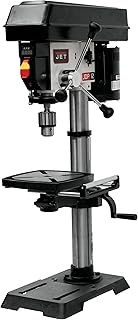
JET 12″ Benchtop Drill Press, Variable Speed, Digital RPM Readout
Check PriceDoweling is one of the strongest, most invisible joinery methods, yet it demands absolute hole alignment. A drill press paired with a dowel jig or a drilling fence guarantees that mating holes line up on both components. You can plunge exactly to the required depth and duplicate that setting across an entire production run. The result is furniture frames and panels that assemble without forcing.
To avoid under or oversized dowel fits, use a brad point bit that matches the dowel diameter exactly. Clamp the workpiece firmly and lower the quill in a smooth, continuous motion. The press’s zero deflection means the hole stays on axis, even when boring deeply into end grain. If you ever need to drill accurate joinery away from the bench, a portable drill guide technique can serve as a temporary stand in.
Achieving Clean Countersinks and Counterbores
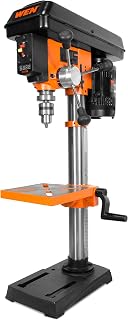
WEN 10-Inch Benchtop Drill Press, 6.2-Amp Variable Speed Motor with Cast Iron Construction, and Laser (DP1062V)
Check PriceA drill press is used for finish carpentry tasks like countersinking screw heads below the surface and creating counterbores for bolt heads. Set the depth stop once, and every hole will receive the exact same tapered recess. This keeps hinges flush, filler plugs neat, and assembly work looking professional. The press’s slow, controlled descent prevents chipping around the rim.
Using a combination counterbore drill bit with a pilot tip speeds up hardware installation dramatically. You can drill the through hole, pilot shaft, and flat bottomed cavity all in one plunge. In production environments, this simple setup eliminates the cost of rework caused by misaligned fasteners. It is a straightforward way to elevate the fit and finish of any build.
Tapping Threads Accurately in Metal Projects
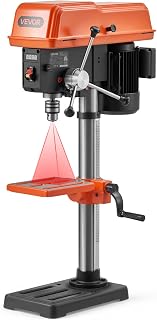
VEVOR 10-Inch Benchtop Drill Press, 5 Amp, 0.8 HP 600W Bench Drill Press, 530-3140 RPM Variable Speed, 0-45° Tilting Worktable, with Laser and LED Work Light, Tabletop Drilling Machine, for Wood Metal
Check PriceThreading holes is a precision operation that benefits immensely from a drill press. After drilling the tap size hole, you can mount a tapping head or simply use the press to align the tap perfectly perpendicular. Keeping the tap in line with the hole axis drastically reduces the risk of breakage and crooked threads. A low spindle speed and plenty of lubrication are essential for success.
Manual tapping with a spring center in the chuck is a popular method for small, deep threads. The press guides the tap straight while your hand provides the rotational torque. This hybrid approach is much faster than hand tapping unguided and produces threads that accept fasteners smoothly. It is especially valuable when working on engine parts, robotics plates, and custom brackets.
Sanding and Buffing Attachments for a Smooth Finish
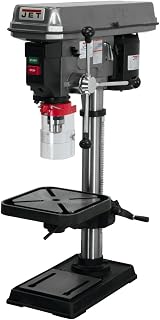
JET 15-Inch Benchtop Drill Press, 16 Speed, 3/4 HP, 115/230V 1Ph (Model J-2530)
Check PriceBeyond drilling, a drill press transforms into a stationary drum sander with the right spindle attachment. You can smooth curved edges, contours, and interior cutouts far more evenly than with a handheld tool. The consistent speed and rigid quill prevent the drum from skipping and digging into the workpiece. This makes it a favorite for luthiers, scroll saw enthusiasts, and model builders.
Buffing and polishing wheels mounted in the chuck let you bring metal or coated parts to a mirror shine. The press holds the wheel at a set height, allowing you to present the work with both hands for better control. Keep speeds moderate and always press the piece below the centerline of the wheel to avoid grabbing. This single machine replaces a nest of dedicated finishing stations in a small shop.
Leveraging Adjustable Speed Settings and Laser Guides
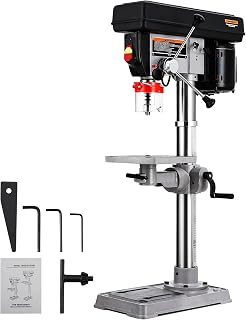
Garvee 13 in Benchtop Drill Press, 7.5 Amp 120V, 288-3084 RPM Variable Speed Cast Iron Bench Drill Press, 0-45°Tilting Worktable, Tabletop Drilling Machine for Wood Metal
Check PriceModern drill presses feature variable speed motors or stepped pulleys that allow you to match RPMs to the material and bit diameter. Large forstner bits need slow speeds to avoid burning, while small twist bits cut fastest at high speed. A built in laser guide eliminates the need to mark every hole with a center punch. It projects a crosshair at the exact point of contact, saving layout time.
LED work lights integrated into the head brighten the drilling zone and reduce shadows. These small features drastically improve accuracy, especially when working with small parts or dark woods. You can switch from a 3 inch forstner in a heavy blank to a 1/8 inch pilot hole in steel with just a belt change and speed dial. Full control over RPMs is what separates a versatile drill press from a single purpose machine.
Benchtop vs Floor Drill Press: Choosing Your Workhorse
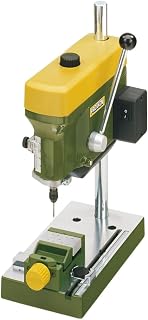
PROXXON Precision Bench Drill Press – Micro Hole Capability, Adjustable Depth & Table, 3-Speed Selection, Durable Design, with 6 Precision Collets for Detailed Projects – TBM 115
Check PriceBenchtop models dominate home garages because they bolt onto a work surface and leave floor space for other tools. They typically handle bits up to 3/4 inch and offer swing distances from 10 to 13 inches. A cast iron base adds mass to dampen vibration, making them surprisingly stable. These machines excel at cabinet hardware, hobby projects, and light metal fabrication.
Floor standing drill presses bring taller columns, longer quill travel, and often more powerful motors. They let you work on large panels, door stiles, and assembled projects without awkward repositioning. The extra swing capacity is crucial when drilling the center of a 20 inch workpiece. If your projects routinely involve heavy timber or thick plate steel, a floor model is a practical, long term investment.
Using the Tilting Worktable for Angled Holes
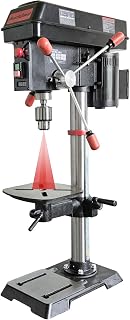
BUCKTOOL 12-Inch Benchtop Drill Press, 6-Pole Motor, 3/4 HP, 360-2000 RPM
Check PriceA drill press is used for angled joinery like pocket holes, splayed legs, and rake angles when the table tilts. Most benchtop units offer a 45 degree left and right tilt, typically with a positive stop at 90 degrees. You align the workpiece to a fence or clamp it directly to the table, then drill precisely angled holes without jerking the bit.
This eliminates the slop and deflection that occur when attempting freehand angled drilling. Combined with an angle gauge or digital protractor, a tilting worktable lets you set up compound angles or bevel joinery with absolute confidence. Whether you are crafting ladder rungs, building splayed-leg tables, or running angled cable passages, the tilting table ensures smooth, repeatable entry without damaging your stock.
How to Choose the Best Drill Press for Your Workshop
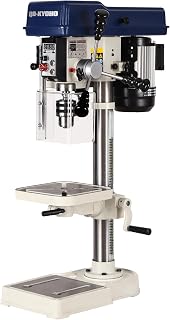
10-Inch Benchtop Drill Press- Variable Speed 50-3000 RPM,Bench Drill Press Cast Iron Table & Base, 6.2-Amp Drill Presses With Laser And LED Work Light ,0.4 kW Variable Frequency Drive (white)
Selecting the right drill press comes down to understanding your primary materials, workshop footprint, and project scale. Here are the core factors to evaluate before buying:
1. Swing Size & Capacity: The swing measurement determines the maximum width of a workpiece you can drill to the center. A 10-inch press reaches 5 inches from the column, while a 15-inch press reaches 7.5 inches. Match the swing to the size of panels or stock you routinely work with.
2. Motor Power (HP & Amps): Motor output dictates how smoothly the bit cuts through dense stock. Light-duty benchtop units typically offer 1/3 HP to 1/2 HP, ideal for softwoods and thin aluminum. Heavy hardwoods and thick steel plate require 3/4 HP to 1 HP or higher to avoid stalling under heavy feed pressure.
3. Speed Range & Adjustment System: Variable speed controls let you adjust RPMs instantly with a mechanical lever or digital dial, while belt-driven pulley systems require manual belt repositioning. Choose variable speed if you frequently swap between large Forstner bits, small twist drills, and metal-cutting taps.
4. Quill Travel Depth: Quill travel limits how deep you can plunge in a single stroke without re-adjusting the table height. Standard benchtop presses offer 2 to 3 inches of travel, whereas floor-standing models often provide 4 to 6 inches, which is essential for deep mortising or thick timber boring.
5. Table Build & Adjustability: Look for a heavy cast iron table with integrated T-slots or clamping channels. A crank-operated rack and pinion height adjustment makes raising and lowering heavy setups effortless compared to manual slide tables.
5 Common Drill Press Mistakes to Avoid
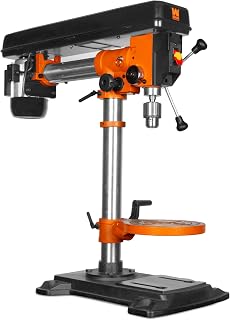
WEN 6.2-Amp 33-Inch Radial Arm Drill Press, Benchtop Design with 5 Speeds and Cast-Iron Construction (4233)
1. Drilling Without Securing the Workpiece: Never hold stock freehand against the drill press table. The bit can grab the material, spinning it violently (the helicopter effect) and causing severe injury or ruining the workpiece. Always use a drill press vise, hold-down clamps, or a sturdy fence.
2. Running the Spindle at the Wrong RPM: Using high speeds on large bits or hard metals overheats the cutting edge, dulls the bit prematurely, and burns wood grain. Follow speed charts: large bits and hard metals require slow RPMs; small bits in soft materials require higher RPMs.
3. Forcing the Feed Pressure: Pushing the quill handle down too hard generates excessive friction, causes bit deflection, and can stall the motor. Let the cutting edges work at their own pace, easing pressure slightly as the bit exits to minimize bottom-side tear-out.
4. Forgetting Cutting Fluid on Metal Passes: Drilling steel or stainless without cutting oil creates extreme heat that dulls high-speed steel bits in seconds. Apply a few drops of cutting fluid or thread-cutting oil regularly during metalworking passes.
5. Neglecting Chip Removal on Deep Holes: Accumulated shavings choke the flutes of the drill bit, heating the metal and clogging the hole. Use a peck-drilling technique—plunging briefly and retracting the bit every quarter-inch—to clear chips out of deep bores.
Frequently Asked Questions
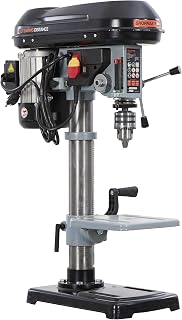
SHOPMAX 10 inch 9 adjustable speeds 5 Amp Benchtop Drill Press
Can I use a drill press as a router?
No. Drill press spindles and bearings are designed strictly for axial (downward) pressure. Lateral forces from routing will loosen the chuck taper, damage internal bearings, and create a dangerous projectile hazard. Always use a dedicated router table or handheld router for side-cutting tasks.
What is drill press runout, and how do I fix it?
Runout is the slight wobble or off-center rotation at the tip of the bit. You can reduce runout by thoroughly cleaning dirt or grease from the spindle taper and arbor, using high-quality precision bits, and ensuring the chuck is properly seated and tightened with the chuck key balanced on all three holes.
How do I square the drill press table to the spindle?
Insert a bent rod or machinist’s square into the chuck, lower the spindle toward the table, and rotate the chuck by hand. Adjust the table tilt locking mechanism until the gap between the reference tool and table surface remains perfectly uniform around a full 360-degree sweep.
What size drill press do I need for a home woodworking shop?
A 10-inch to 12-inch benchtop drill press with a 1/2 HP motor handles 90% of home woodworking tasks, including Forstner bit boring, dowel joinery, and sanding drum usage. If you build large doors, post-and-beam structures, or heavy furniture, upgrade to a 15-inch floor model.
Can a benchtop drill press drill through stainless steel?
Yes, provided you drop the spindle speed to its lowest setting (300 to 500 RPM), use a cobalt or carbide-tipped drill bit, apply heavy feed pressure, and lubricate the cut continuously with cutting fluid. Slow speeds prevent stainless steel from work-hardening.
Why is a depth stop necessary on a drill press?
A mechanical depth stop locks the quill movement at an exact point, ensuring that every hole drilled in a batch has identical depth. It is vital for blind holes, counterbores, hinge recesses, and dowel joinery where over-drilling ruins the workpiece surface or weakens the structure.
How often should I lubricate and maintain my drill press?
Apply paste wax or light machine oil to the cast iron table and steel column monthly to prevent rust and ensure smooth table travel. Inspect drive belts for cracking or slip annually, and blow out dust from inside the motor casing and pulley housing after heavy sanding sessions.
Conclusion
Understanding what a drill press is used for opens up a level of shop precision that handheld tools simply cannot replicate. From boring perfectly perpendicular holes through thick steel plate to executing clean, repetitive dowel joints and angled mortises, a quality drill press transforms tricky joinery and metal fabrication into simple, predictable tasks.
Whether you select a compact 10-inch benchtop unit for hobby work or a heavy-duty floor press for daily production, combining rigid column support with proper bit speeds and secure clamping guarantees superior results every time. Take time to set up your workpiece safely, match your speed to the material, and let your press deliver the flawless accuracy your projects deserve.
Disclosure: As an Amazon Associate, we earn from qualifying purchases at no extra cost to you. Our posts are created with AI tools and human editing.