If you have ever assembled cabinets, shelves, or furniture with dowels, you know alignment is everything. A tiny angle error can turn a strong joint into a frustrating gap. The question ‘Do I need a jig for dowels?’ comes up often because many woodworkers want accuracy without wasting money. The short answer is yes, for most repeatable results a jig helps dramatically.
This guide explains when you can skip a dowel jig and when you should use one. You will also learn how different jig types work, what to look for in a kit, and how to drill accurate holes step by step. We will compare freehand drilling with jig guided work so you can decide confidently.
Why Dowel Accuracy Determines Joint Quality
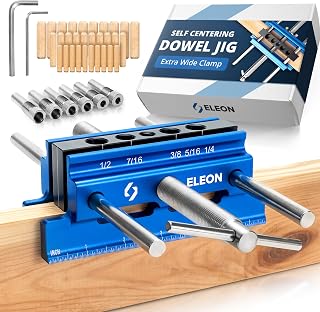
Self Centering Dowel Jig with Elongated Jaws & Extra Wide Clamp up to 6.7 inches
Check PriceDowel joints rely on two or more holes that line up perfectly between boards. If the holes are off center even by a small amount, the dowel pins force the boards out of alignment. That causes uneven edges, open seams, or joints that refuse to close tight. Accuracy is not just about appearance, it also affects long term strength.
A dowel jig holds your drill at a fixed angle and position while you bore holes. This control is difficult to reproduce with a hand drill alone. Without a guide, the bit can wander on entry and exit, especially in hardwood or end grain.
What a Dowel Jig Actually Does
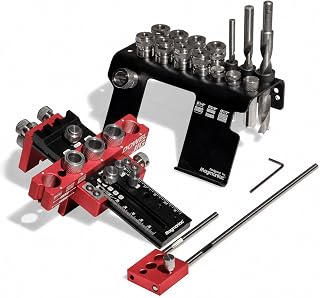
Dowel Jig, Doweling Jig for Woodworking, Dowel Maker Jig
Check PriceA dowel jig acts as a drilling template that clamps or aligns to the edge or face of a workpiece. It uses hardened steel bushings to guide the drill bit straight into the material. The jig removes the guesswork from positioning, angle, and depth. Most models also have adjustable stops for repeat spacing.
Inside the jig body, a set of bushings matches common dowel sizes like 1/4 inch, 3/8 inch, or 1/2 inch. You can measure from a fence or center mark and clamp the jig in place. The drill bit then follows the bushing, so the hole lands exactly where you planned. This consistency matters when joining multiple pieces, and you can compare top rated kits in this best dowel jig guide.
Can You Drill Dowel Holes Without a Jig
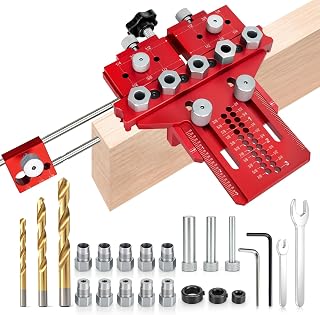
Dowel Jig Kit with Position Stop & Clamp, Full Featured Doweling Jig
Check PriceYes, you can drill dowel holes without a jig, but the results depend heavily on your experience. Skilled woodworkers sometimes drill freehand using a center punch, a drill press, or carefully measured layout lines. Even then, small errors can compound across a row of holes. For occasional repairs or hidden joints, freehand might be acceptable.
If you only need one or two dowels and the joint will not be visible, a hand drill may work. You can start the hole with a brad point bit and a steady hand. But you must control depth and angle at the same time. Most people find this harder than it looks.
For projects like cabinet face frames, table aprons, or adjustable shelves, visible alignment is critical. A tiny mismatch at the joint line is obvious and difficult to hide. In these cases, a jig is usually worth the investment because it removes most of the risk.
Benefits of Using a Dowel Jig
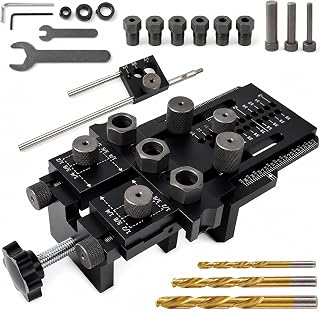
Dowel Jig Kit Woodworking Quick Positive Stop Clamp 1/4 3/8 1/2 in
Check PriceThe main benefit is repeatable accuracy. Once you set the jig for a specific hole pattern, you can drill identical holes in every matching board. This speeds up assembly and reduces the number of test pieces you waste. Stronger joints come from holes that align without forcing the dowel in place.
A jig also protects your workpiece from blowout and wandering. The bushing supports the bit close to the wood surface, which is especially helpful when drilling near an edge. Many jigs have clamps or adjustable stops that prevent the tool from shifting mid cut. According to Wood Magazine doweling basics, reliable alignment is exactly what separates a quality dowel joint from a weak one.
Types of Dowel Jigs and Their Differences
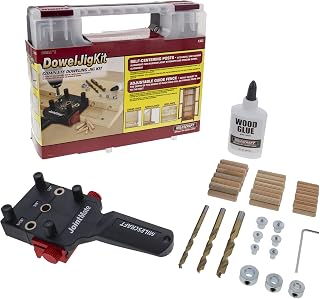
Milescraft 1333 DowelJig Kit, Self Centering Handheld Dowel Jig
Check PriceThe most common style is the self centering jig. It aligns itself to the center of a board edge and works well for standard butt joints. Many self centering models include different drill guide sizes in one body. They are portable, easy to set up, and ideal for most furniture tasks.
JointMaster style jigs use a clamping design that locks onto the board for hands free operation. They often have multiple holes and a measuring scale for precise spacing. Another option is a benchtop doweling jig or a drill press jig for production work. Each type has strengths depending on your project size.
Some kits include drill bits and stop collars, while others require you to buy them separately. A stop collar controls hole depth and prevents you from drilling through the panel. This feature is essential when you cannot risk punching out the back side.
How to Choose the Right Dowel Jig for Your Projects
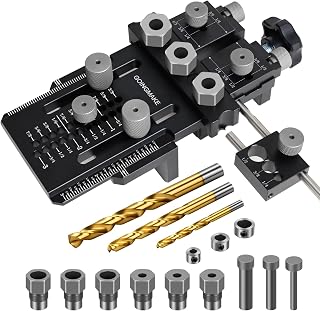
GOINGMAKE Dowel Jig Kit,Doweling Jig with Quick Positive Stop and Clamp
Check PriceStart with the dowel sizes you use most often. Many woodworkers prefer 3/8 inch dowels for cabinets and 1/4 inch for light drawers. Choose a jig that supports those sizes without needing extra bushings. If you build thicker furniture, look for adjustable capacity up to at least 1 1/2 inches.
Also check the clamping system. A jig that shifts while drilling defeats the purpose. Quick clamp models are faster, while screw clamp models often provide a more secure hold. For longer boards, choose a jig with a repeat stop or index pin for evenly spaced holes.
You may also want a kit that includes drill bits and stop collars. This saves time and ensures the bits match the bushings. If you use a portable drill guide, see this portable drill guide tutorial for related alignment techniques. A good drill bit guide also helps you maintain straight holes.
Step by Step: Drilling Accurate Dowel Holes with a Jig
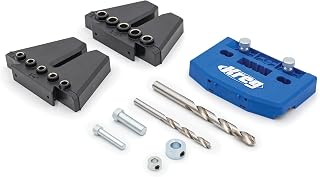
Kreg Dowel Jig Kit, Woodworking Doweling Jig, KHJD345
Check PriceFirst mark the centerline or edge distance on both boards and label the matching faces. Clamp the jig to the first board so the bushing aligns with your mark. Drill the hole to the required depth using a stop collar if your kit includes one. Repeat for all holes on that board before moving to the next piece.
To transfer the hole location to the second board, use dowel centers or center points. Insert a small center point into the first hole, press the two boards together, and the point marks the exact location. Then clamp the jig on that mark and drill the matching hole. This method keeps the joint flush without measuring each point.
Apply glue sparingly inside the hole or on the dowel, then tap the pieces together with a mallet. Clamp the assembly across the joint line and check for square before the glue sets. If the joint fits tight, your jig did its job.
Dowel Jig vs Freehand Drilling: A Quick Comparison
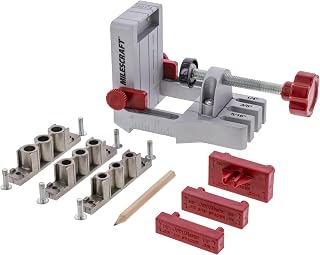
Milescraft 1334 Joint Master, Self Clamping Aluminum Doweling Jig
Check PriceFreehand drilling gives you speed and no setup cost, but it rewards experience. A jig slows you down slightly at the start, yet it makes the rest of the process faster and more predictable. For one off repairs where alignment is hidden, freehand may be fine. For visible furniture joints, a jig is the clear winner.
Another difference is repeatability. With a jig, hole spacing stays consistent across multiple shelves or cabinet sides. Without one, you may need to remark each piece and risk drifting. That extra time often outweighs the cost of even a basic jig.
You can also combine a jig with a drill press for maximum control. But a handheld jig is portable enough for most assembly tables. If you are deciding whether to buy, think about how many dowel joints you will make in a year. Ten or more joints usually justify the tool.
FAQ: Do I Need a Jig for Dowels?
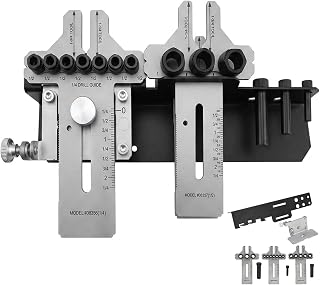
08359 Stainless Steel Dowelling Jig Kit with 1/4 inch 3/8 inch 1/2 inch Holes
Check PriceBelow are the most common questions woodworkers ask about dowel jigs and drilling. Each answer assumes standard woodworking projects, not production CNC work. Use these points as a quick reference before you buy.
Can I use a drill press instead of a dowel jig?
Yes, a drill press can drill straight holes and often works well with a fence for alignment. However, a drill press is less portable and takes more setup for long boards or case panels. A dowel jig is easier to clamp onto an assembled cabinet or shelf. Both methods can work, but the jig is more flexible.
What size dowel jig should I get?
A self centering jig that handles 1/4 inch, 3/8 inch, and 1/2 inch holes covers most furniture and cabinet work. If you use larger dowels, check the maximum opening before buying. Many woodworkers only need one adjustable jig for standard cases and frames.
Do I need a special drill bit for doweling?
A standard twist bit or brad point bit works when it matches the bushing diameter. Brad point bits often start cleaner in solid wood. Use a stop collar to control depth, especially when drilling blind holes.
How deep should dowel holes be?
The hole depth is usually half the dowel length plus a small glue space. For example, a 2 inch dowel usually needs about 1 1/8 inch deep holes in each board. Check your jig instructions because some kits include stop collar settings.
Conclusion
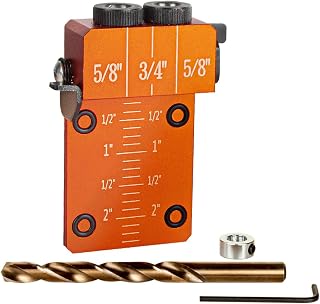
3/8 inch Self Centering Dowel Jig Kit with Cobalt M35 Drill Bit
Check PriceFor most woodworkers, the answer to ‘Do I need a jig for dowels?’ is yes. A dowel jig improves alignment, speeds up assembly, and prevents costly mistakes in visible joints. You can drill without a jig, but you will likely spend more time on layout and repairs.
Invest in a self centering or clamp style jig that matches your dowel sizes. With a little practice, you will produce tight, square joints that hold for years. The tool is simple, but the difference in accuracy makes it one of the best value purchases in woodworking.
Disclosure: As an Amazon Associate, we earn from qualifying purchases at no extra cost to you. Our posts are created with AI tools and human editing.