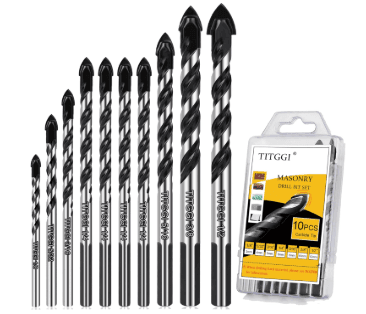
A benchtop drill press is a stationary power tool that brings unmatched precision to repetitive drilling tasks. Unlike a handheld drill, it mounts on a workbench and uses a motor driven spindle to rotate the bit with perfect perpendicularity. This guide explains exactly what a benchtop drill press is and how it can upgrade your woodworking or metalworking projects.
Whether you are a hobbyist building furniture or a professional fabricating metal parts, consistency matters. The tool’s rigid cast iron construction and adjustable depth stops allow you to drill identical holes time after time. Many woodworkers and machinists agree that the benchtop drill press delivers accuracy nearly impossible to achieve by hand.
What Is a Benchtop Drill Press?
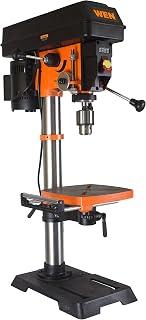
WEN 12-Inch Benchtop Drill Press, 6.2-Amp Variable Speed Motor with Cast Iron Construction, Laser and LED Work Light (DP1263V)
Check PriceA benchtop drill press is a compact, stationary drilling machine designed to sit on a workbench rather than the floor. Its main advantage is the ability to drill perfectly straight holes using a rotating chuck that moves only vertically. The tool typically includes a base, a column, an adjustable table, and a motor head with a feed lever. For a thorough mechanical definition, you can explore the Wikipedia article on drill presses.
The term ‘benchtop’ refers to the machine’s smaller footprint, making it ideal for home garages and compact shops. Most models range from 8 inch to 13 inch swing, meaning the distance from the column to the spindle center doubled. This size determines the maximum width of material you can drill to the center. Despite their smaller size, these presses pack sturdy motors often between 2.3 and 7.5 amps.
Key Features of a Benchtop Drill Press
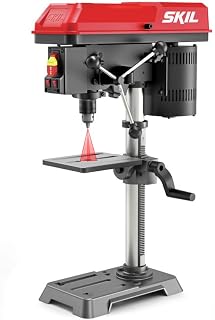
SKIL 6.2 Amp 10 In. 5-Speed Benchtop Drill Press with Laser Alignment & Work Light – DP9505-00
Check PriceWhen you examine a benchtop drill press, several components determine its performance. The motor delivers torque through a belt system to the spindle, often offering multiple speed settings. A cast iron table tilts up to 45 degrees for angled holes and includes a dust channel or slots for clamping vises. Modern units frequently add LED work lights and laser guides to boost accuracy.
The depth stop is a crucial feature for blind holes and repeatable operations. By setting a physical stop, you can drill to an exact depth across many workpieces without measuring each time. Additionally, the rack and pinion table height adjustment lets you move the table smoothly with a crank. These design elements transform a simple motor into a precision machine that saves both time and material.
How Does a Benchtop Drill Press Work?
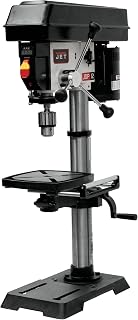
JET 12″ Benchtop Drill Press, Variable Speed, Digital RPM Readout
Check PriceOperating a benchtop drill press is straightforward once you understand the feed handle and speed selector. You start by inserting a drill bit into the chuck and tightening it securely with a chuck key. After clamping your workpiece to the table, you turn on the motor and rotate the feed lever to lower the spinning bit into the material. The quill assembly guides the spindle in a strictly vertical path, eliminating wandering.
Variable speed or step pulley systems let you match RPMs to the material and bit diameter. Slower speeds suit large Forstner bits and metal drilling, while faster settings optimize small twist bits in wood. The process relies on mechanical leverage, so even hard materials like steel can be penetrated with moderate effort. Understanding this mechanism is the first step to drilling clean, burr free holes.
Benchtop Drill Press vs. Floor Drill Press: What’s the Difference?
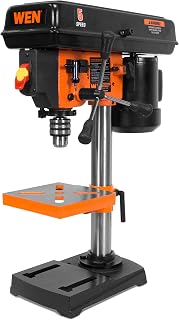
WEN 2.3-Amp 8-Inch 5-Speed Cast Iron Benchtop Drill Press (4206T)
Check PriceWhile both styles share the same fundamental drilling mechanics, the primary difference lies in height and capacity. A floor drill press stands on its own column that reaches the ground, offering a much taller column. That extra height accommodates thicker stock and provides longer spindle travel, which is vital for furniture makers drilling through 4×4 posts. If you need to bore into large, heavy pieces, a floor model is often the better choice.
Benchtop units excel in smaller shops where floor space is limited. They mount securely on a sturdy workbench and usually weigh between 30 and 80 pounds, making them portable enough to rearrange. The tradeoff is a shorter column and less quill travel, but for most home projects and light metalwork, that is rarely a limitation. When footprint and budget matter, our best benchtop drill press guide highlights models that maximize performance per square inch.
Who Needs a Benchtop Drill Press?
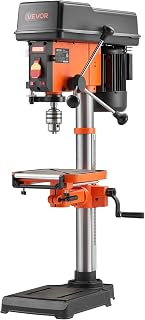
VEVOR 12-Inch Benchtop Drill Press, 6.2 Amp, 1 HP Bench Drill Press, 530 to 3140 RPM Variable Speed, 0-45° Tilting Worktable, with Laser and LED Work Light
Check PriceThis tool is a game changer for anyone who drills holes regularly and values precision. Woodworkers building cabinets, shelves, or dowel joinery rely on the tool to create perfectly aligned holes for hardware and dowels. Hobbyists making jewelry, models, or custom electronics also benefit from the micro hole capability that high precision models offer. Essentially, if you are tired of crooked handheld holes, a benchtop press is the solution.
Metal fabricators and automotive enthusiasts also appreciate the controlled slow speed torque for drilling through steel and aluminum. Even DIY homeowners find that installing shelf brackets and curtain rods becomes far more professional when holes are straight. It’s not just a luxury; for tasks like tapping threads in metal or using large plug cutters, the stability of a drill press is practically mandatory. Many find that what a drill press is used for soon expands once they have one on the bench.
Materials You Can Drill with a Benchtop Press
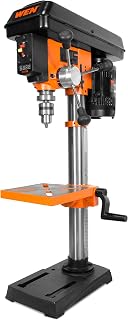
WEN 10-Inch Benchtop Drill Press, 6.2-Amp Variable Speed Motor with Cast Iron Construction, and Laser (DP1062V)
Check PriceA quality benchtop drill press can handle wood, plywood, MDF, and a variety of soft and hardwoods with ease. The consistent speed and downward pressure prevent tear out and burning, especially with sharp brad point bits. Many users also drill plastics like acrylic and polycarbonate, though slower speeds are needed to prevent melting. With the appropriate bit, the press cuts through aluminum, brass, and mild steel plates smoothly.
More demanding materials like stainless steel or hardened alloys require lower RPM and cutting fluid. The cast iron table and rigid column help absorb vibrations that would otherwise snap small bits. Beyond simple through holes, you can use forstner bits for flat bottom holes, hole saws for large diameters, and sanding drums for finishing curves. This versatility makes the tool a central part of a well rounded workshop.
Understanding Drill Chuck Types and Sizes
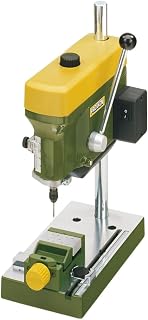
PROXXON Precision Bench Drill Press – Micro Hole Capability, Adjustable Depth & Table, 3-Speed Selection, Durable Design, with 6 Precision Collets for Detailed Projects – TBM 115
Check PriceThe drill chuck is the component that grips the bit and ensures concentric rotation. Most benchtop presses come with a keyed chuck, requiring a T shaped key to tighten the jaws securely around the bit shaft. Standard sizes are 1/2 inch or 5/8 inch, which dictate the maximum bit shank you can hold. For precision micro work, some models feature collets that hold tiny bits, as seen on high speed precision presses.
Upgrading to a keyless chuck can speed up bit changes, though it might sacrifice some gripping force on large bits. The taper fit between the chuck and spindle, often a Morse taper, must be clean to prevent run out. Even a few thousandths of an inch of wobble can ruin a hole’s accuracy. If you’re researching further, our explanation of what a drill chuck is covers maintenance and upgrades.
Variable Speed vs. Fixed Speed: Which Is Better?
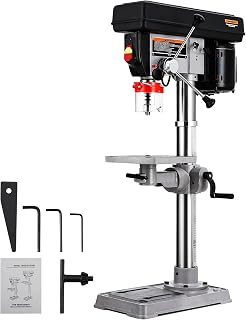
Garvee 13 in Benchtop Drill Press, 7.5 Amp 120V, 288-3084 RPM Variable Speed Cast Iron Bench Drill Press, 0-45°Tilting Worktable
Check PriceVariable speed drill presses use electronic controls or a Reeves drive to adjust RPM on the fly without moving a belt. This convenience is ideal when you frequently jump between wood, plastic, and metal in one session. Digital readouts, like on the JET model, let you dial in exact speeds for cleaner cuts. The tradeoff is a higher initial cost and slightly more complex electronics to maintain.
Step pulley systems offer several fixed speeds by shifting a belt between grooved pulleys on the motor and spindle. These models are mechanically simpler, often more durable over decades, and typically less expensive. The speed change process takes a minute but is reliable. For a dedicated workshop where you batch drill a single material, fixed speed presses still deliver excellent results without the added cost.
Laser Guides and LED Lights: Are They Worth It?
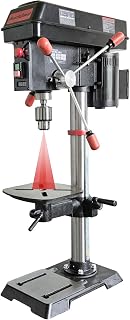
BUCKTOOL 12-Inch Benchtop Drill Press, 6-Pole Motor, 3/4 HP, 360-2000 RPM
Check PriceLaser guides project a crosshair onto the workpiece, helping you align the bit with a pencil mark before drilling. Many woodworkers find that this feature cuts layout time and reduces missed center punches. However, the lasers must be calibrated after assembly and can drift over time, so they are an aid, not a replacement for marking. An LED work light is even more practical, banishing shadows from the drilling area.
When used together, the laser and LED pair significantly boost accuracy and safety. You can see the contact point clearly and avoid pinching fingers in the dark. Most users who buy a press with these features say they wouldn’t go back. These additions add relatively little to the price, making them a worthwhile investment for beginners and pros alike.
Key Safety Tips When Using a Benchtop Drill Press
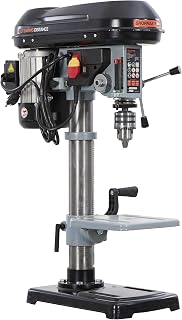
SHOPMAX 10 inch 9 adjustable speeds 5 Amp Benchtop Drill Press
Check PriceAlways clamp your workpiece securely to the table with a vise or hold down clamp. A spinning bit can grab loose material and spin it violently, causing serious hand injuries. Wear safety goggles and avoid loose clothing or dangling jewelry that could catch in the rotating parts. Keep the drill bit sharp; a dull bit requires excessive force and is more likely to bind and break.
Never leave the chuck key in the chuck after tightening. The key can become a dangerous projectile when the motor starts. Double check the speed setting before powering on and make sure the table height is locked. Proper safety habits transform the drill press into one of the safest tools in the shop, with far fewer kickback incidents than handheld drilling.
How to Maintain Your Benchtop Drill Press for Longevity
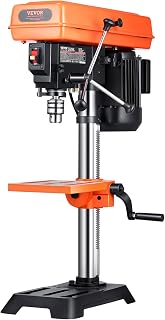
VEVOR 10 in Benchtop Drill Press, 6.2A Induction Motor, Tabletop Drilling Machine with 610/940 / 1500/2150 / 2800 RPM Adjustable Speed, 0-45° Tilting Worktable, LED Work Light
Check PriceRoutine maintenance starts with cleaning sawdust and metal chips from the column, table, and rack. Apply a light coat of paste wax or machine oil to bare cast iron surfaces to prevent rust. Check the belt tension periodically and replace if it shows cracks or glaze. A slipping belt can cause speed variations and poor hole finish.
The quill and spindle bearings benefit from occasional light lubrication, but avoid over oiling as it attracts dust. Inspect the chuck taper joint for debris and wipe it clean before remounting. If run out develops, use a dial indicator to diagnose whether the chuck or spindle needs adjustment. Well maintained, a benchtop drill press can deliver faithful service for decades.
Frequently Asked Questions About Benchtop Drill Presses
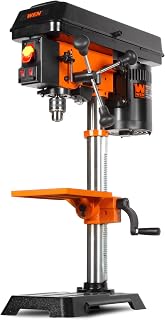
WEN 10-Inch Benchtop Drill Press, Chuck Key Storage, Laser Guide, 6.2-Amp 5-Speed Motor with Cast Iron Construction, Laser and LED Work Light (DP1050)
Check PriceCan I drill metal with a benchtop drill press?
Yes, even entry-level presses can drill aluminum and mild steel if you use the correct speed and cutting oil. Slower RPMs prevent overheating and extend bit life.
What does the swing measurement mean?
Swing is the distance from the column to the spindle center, multiplied by two. A 10-inch swing means you can drill a hole in the center of a 10-inch wide board.
Do I need a special stand?
Most benchtop presses are designed to be mounted directly on a solid workbench. Bolt them down to prevent tipping during use.
Final Thoughts on Choosing the Right Benchtop Drill Press
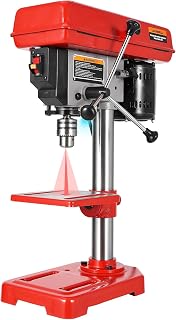
8″ Benchtop Drill Press, Laser Ray (Class II Max. 1mW), Tabletop Drilling Machine with 5 Adjustable Speeds (620 to 3100 RPM), 0-45°Tilting Worktable with LED Light (1W)
Check PriceSelecting the ideal benchtop drill press comes down to swing capacity, motor power, and the creature comforts you value. If space is tight, an 8 or 10 inch model with a cast iron base will serve most home shops reliably. For versatility, a variable speed unit with laser and light combo streamlines every job. Invest in a quality machine and it will reward you with straight, repeatable holes for years.
Remember that accessories like a good machine vise, a set of sharp brad point bits, and a simple dust collection attachment elevate the experience even further. With the fundamentals covered here, you are ready to compare specs and choose a press that fits your workflow. Precision drilling is no longer exclusive to large industrial shops; it sits comfortably on your own bench.
Disclosure: As an Amazon Associate, we earn from qualifying purchases at no extra cost to you. Our posts are created with AI tools and human editing.