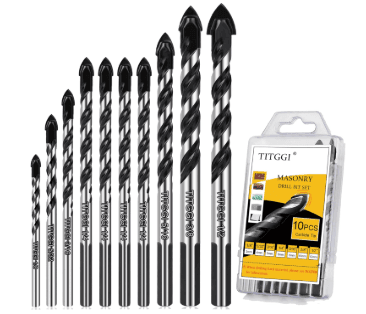
A drill block is a simple yet transformative tool that helps you drill perfectly perpendicular holes every time. It is essentially a solid block of metal or durable plastic with precision sized guide holes. These guide holes keep your drill bit from wandering, ensuring your workpiece remains accurate and splinter free. Whether you are a seasoned woodworker or a weekend DIY enthusiast, mastering this tool will instantly improve your joinery and assembly quality.
Understanding the Drill Block
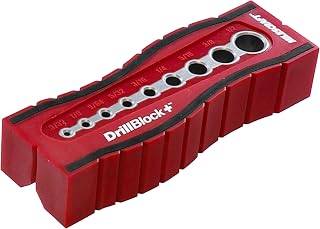
Milescraft 1336 Drill Block Plus- Handheld Drilling Guide, Drilling Jig with Drill Guides for 9 of the Most Common Imperial Drill Bit Sizes, Precision Drilling Tool Accessory
Check PriceA drill block functions as a portable, handheld drill press. The hardened steel bushings inside provide a rigid path for your drill bit, eliminating the natural wobble of freehand drilling. Most models include multiple bit diameter options, allowing you to switch sizes without losing accuracy. It is an essential accessory when you cannot bring your workpiece to a stationary drill press but still demand precision.
Why Accuracy Matters in Woodworking
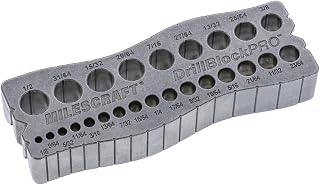
Milescraft 1307 Drill Block PRO – All-Metal Handheld Drilling Guide for Straight Holes. 25 Drill Guides in One! 1/8” to 1/2” in 1/64” Increments. Dual V-Groove Design for Round Stock & Corners
Check PricePerfectly straight holes are the foundation of strong, seamless joints. Even a slight angle can misalign dowels, weaken pocket holes, or prevent hardware from sitting flush. A drill block eliminates this variable by forcing the bit to enter at exactly 90 degrees to the surface. When you use one consistently, your projects fit together more tightly and look professionally built.
Manual skill alone rarely produces the repeatable accuracy that a hardened guide can deliver. Drilling a series of identical holes freehand in hardwood often leads to subtle deviations. These tiny errors compound over a shelf or cabinet, making assembly frustrating. Learning how to drill a straight hole with a block solves this problem at the source, saving time and material.
How to Choose the Right Drill Block for Your Needs
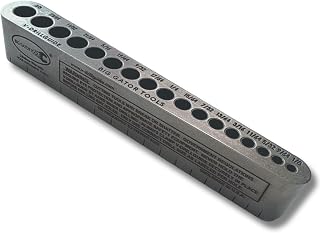
Big Gator Tools The Original V-Drill Guide STD1000DGNP, Sizes 1/8–3/8 Inch.
Check PriceSelecting a drill block begins with evaluating the range of bit sizes you commonly use. A compact model with six common sizes is perfect for light furniture assembly. If your work spans detailed craft tasks and larger joinery, consider an all metal block with 25 incremental guides. The best drill block options offer features like V grooves for round stock and non-slip base plates.
Material quality directly affects longevity and precision. Steel blocks withstand heavy use without the guide holes elongating over time. Polymer blocks are lighter and resistant to rust, but they may wear faster when used with high speed bits. Always match the block’s bushing hardness to the intensity of your workload to maintain accuracy for years.
Step 1: Preparing Your Workpiece
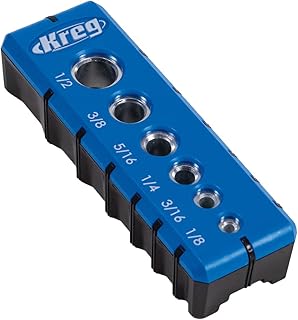
Kreg Portable Drilling Guide, 6 Hardened Drill Guides, KDG-6000
Check PriceStart by clearly marking the center point of each hole with a sharp pencil or an awl. A small indent from an awl helps the drill bit tip engage without skating across the surface. If you need multiple identical holes, use a measuring jig rather than measuring each individually. Consistent layout ensures the drill block aligns perfectly with every intended location.
Clamp your workpiece securely to a stable workbench before bringing the drill block into position. Movement during drilling is the most common cause of inaccurate holes and tear-out. Double sided tape can provide extra holding power for small pieces that clamps cannot easily grab. A solid setup allows you to focus entirely on controlling the drill.
Step 2: Setting Up the Drill Block
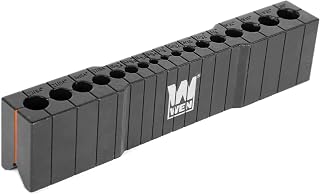
WEN Multi-Functional Universal Handheld Drill Guide and Jig (WA1502)
Check PricePlace the drill block over the marked spot, aligning the appropriate guide hole directly above the indentation. Press down firmly and use the viewing window or alignment marks on the block to confirm positioning. Many blocks have a clear acrylic window that lets you see the mark before the bit enters. Take a moment to double check the hole size you selected matches your fastener or dowel diameter.
If your drill block includes a side handle or clamping pads, engage them now. A lightweight block can lift when the drill retracts if not held down steadily. Some woodworkers prefer to clamp the block itself to the workpiece for zero chance of shifting. This extra step is especially valuable when drilling into expensive hardwood or veneered panels where a slip would cause visible damage.
Step 3: Aligning the Drill Bit and Drilling
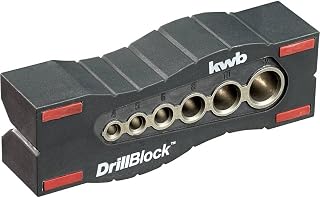
kwb 757900 Drill Jig/Drilling Aid Diameter 4-12 mm Drillblock for Right Angle and Precise Drilling on Surfaces, Round Materials and Edges Including Grip Points
Check PriceInsert the drill bit into the guide bushing before pulling the trigger. Start the drill at a slow speed to allow the bit to find the centered indent you made earlier. Once the tip bites cleanly, you can gradually increase the RPM. Forcing the drill at high speed immediately often causes the bit to ride up the side of the bushing or chatter, enlarging the guide hole.
Maintain steady, even downward pressure and let the guide do all the alignment work. Do not tilt the drill, lean to the side, or twist your wrist. The block will hold the bit true as long as you keep the drill body straight and controlled. Periodically clear wood chips from the hole to reduce friction and prevent the bit from overheating during deeper cuts.
Using a Drill Block for Angled Holes
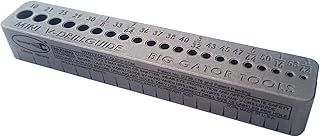
Big Gator Tools SDGMINI MINI V-Drill Guide 21 Drill Sizes by Big Gator Tools
Check PriceA classic drill block excels at 90 degree holes, but you can adapt it for angled drilling with a simple shop made wedge. Cut a wooden wedge at your desired angle and clamp the drill block on top of it. This tilts the entire block while still providing a sturdy guide for the bit. The bushings prevent deflection even when gravity is not working directly downward.
For tight angled spots like chair spindles, a compact V groove block is extremely helpful. The V shaped recess cradles the round stock and self centers the hole while you adjust the angle by hand. Always test on a piece of scrap first to confirm the angle matches your plans. This method works beautifully for creating rake and splay patterns in stool seats.
Tips for Drilling into Metal with a Drill Block
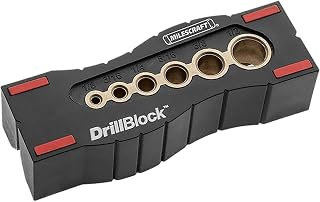
Milescraft 1312 Drill Block – Handheld Drilling Guide, Drilling Jig with Drill Guides for 6 of the Most Common Imperial Drill Bit Sizes, Precision Drilling Tool Accessory
Check PriceDrilling metal requires lower RPM and consistent lubrication, but the same drill block principles apply. Use cutting oil on the bit tip and inside the bushing to reduce heat buildup. The guide hole will naturally stabilize the bit as it bites into the metal surface. However, make sure your block is made entirely of metal, as plastic bushings can melt from transferred heat during extended use on steel.
Begin with a center punch mark deeper than what you would use on wood. This heavy indent is vital because metal lacks wood’s forgiving grain. Once the drill starts, keep pressure firm to maintain chip formation without stalling the motor. With an all steel guide block, you can achieve precisely located holes in aluminum, mild steel, and even thin stainless steel sheets.
Drill Block Maintenance and Care
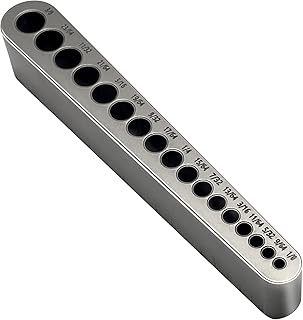
STD1000DGNP Drill Guide for Straight Holes, 17 Drill Sizes, From 1/8″ to 3/8″, in 1/64″ Increments, Heat-Treated Steel, Drill Jig Block, Drill Bit Guide, Lifetime Free Replacement
Check PriceClean your drill block after every major project to remove embedded chips and resin. A quick wipe with mineral spirits on a cloth clears the bushings and maintains their inner diameter tolerance. Avoid leaving the block in damp locations because even hardened steel can develop surface rust over time. A light layer of paste wax applied to the metal parts protects the surface without attracting dust.
Inspect the guide holes periodically for any burrs or deformation. A worn bushing can guide a bit at a very slight angle, undermining the tool’s entire purpose. Most quality blocks use replaceable bushings, so you can swap out a damaged one rather than buying a whole new tool. This simple habit extends the life of your drill block by many years and keeps every hole true.
DIY Jigs Using a Drill Block
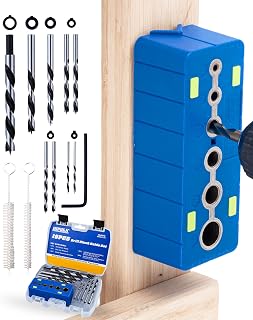
Drill Block Guide Set for Straight Holes with Drill Bits & Stop Collars – Complete Kit with 9 Brad Point Bits, 6 Depth Collars, Case, Guide Blocks for Woodworker Drilling Holes & DIY Projects
Check PriceYou can build a self centering doweling station by embedding a drill block into a larger baseboard. Add a fence with a stop block and you instantly have a repeatable drilling jig for shelf pins and cabinet doors. The block remains stationary while you slide the workpiece against the fence, guaranteeing identical hole spacing. This setup is far cheaper than a dedicated doweling machine.
Another useful jig pairs a drill block with a depth stop collar on the bit. Set the collar to limit plunge depth, and you can drill multiple blind holes without measuring each time. This is perfect for installing concealed hinges or magnetic catches. Combining a high quality block with simple shop accessories greatly expands what you can accomplish with a basic hand drill.
Frequently Asked Questions: What Is the Difference Between a Drill Block and a Doweling Jig?
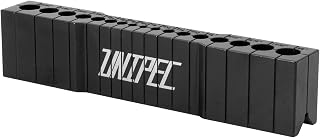
Precision Drill Guide
Check PriceA drill block is a general purpose tool for making straight holes at any location. A doweling jig includes a fence and bushings specifically designed to center holes on the edge of a board for aligning dowel joints. While a drill block can be used for doweling in a pinch, a dedicated jig offers faster, self clamping alignment. For occasional doweling, a block with a V groove and careful marking works well.
Doweling jigs often have expandable dowel pins and internal threads for accurate spacing. Drill blocks, by contrast, give you total freedom to place holes anywhere on a face or edge. Many woodworkers own both tools because they solve different problems. For all around versatility, you will likely reach for the drill block more often in day to day tasks.
Frequently Asked Questions: Can a Drill Block Be Used on a Drill Press?
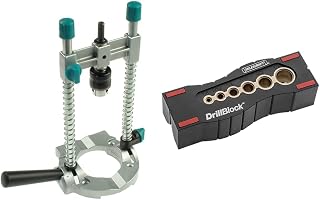
Wolfcraft 4525404 Multi-Angle Drill Guide Attachment For 1/4In. & 3/8In. Drills,Silver & Milescraft 1312 DrillBlock- Handheld Drill Guide
Check PriceYes, placing a drill block under the drill press chuck adds an extra layer of stability for small parts. The block holds the workpiece in place, preventing twisting if the bit grabs. However, the press already provides perfect perpendicularity, so the block mainly serves as a fixture. It is especially beneficial when drilling rounded stock that tends to roll on the press table.
Always clamp the drill block to the drill press table and never just hold it by hand. The mechanical advantage of the press can injure you if the assembly spins freely. Use the block as a custom drill bushing plate to protect the table and guide thin bits. This hybrid approach combines the mobility of the block with the power of the drill press.
Frequently Asked Questions: How Do I Avoid Wobbling When Using a Drill Block?
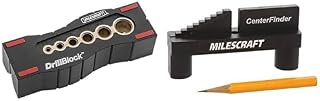
Milescraft 1312 Drill Block + Milescraft 8408 Center Finder
Check PriceWobble usually comes from an undersized bushing or a bent drill bit. Inspect your bit by rolling it on a flat surface and look for any light gaps under the shaft. If the bit is straight, the issue might be that the block’s guide hole is slightly too large for that particular diameter. In that case, switch to a block with closer tolerance bushings for fine work.
Also check that you are not forcing the drill motor sideways during operation. A light grip and letting the block guide the bit naturally reduces oscillation. Push down directly along the axis of the hole and avoid leaning your weight into the drill. This controlled technique prevents the bit from flexing inside the bushing and preserves the hole’s true alignment.
Mastering the drill block is a skill that rewards you with flawless joinery and professional results on every project. When you combine the right block with careful setup and steady drilling technique, you eliminate the guesswork from one of the most fundamental tasks in the workshop. It is an inexpensive upgrade that delivers a dramatic improvement in your craftsmanship.
Disclosure: As an Amazon Associate, we earn from qualifying purchases at no extra cost to you. Our posts are created with AI tools and human editing.